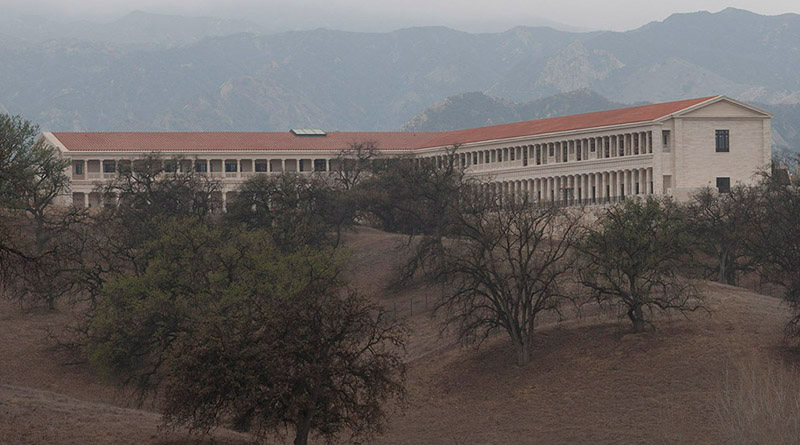

Click here to read more about the newly completed PHI Stoa (pictured above).
The Packard Humanities Institute (PHI) is a non-profit foundation dedicated to archaeology, music, film preservation, and historical archives.
Click here to read more about PHI's programs in archaeology.
Click here to read more about PHI's programs in music.
Click here to search PHI's digital text archives (Greek, Latin, and Benjamin Franklin).
Click here to visit the website of The Stanford Theatre, which is supported entirely by PHI.
Since its founding, PHI has been an operating rather than a purely grant-making foundation. We have undertaken a small number of projects. Many of these have lasted for a decade or more, and our professional staff often participates directly as an active partner. The Packard Humanities Institute does not accept unsolicited proposals.
PHI is not associated in any way with any Hewlett-Packard Company foundations and is independent of the David and Lucile Packard Foundation (from which PHI received its major endowment).